
Breaking the 2 AM Sleep Struggle


The Neuroscience of Why We Wake Up and How to Fix It
Waking up at 2:00 AM is an incredibly frustrating experience. You feel physically exhausted, your eyes are heavy, yet the moment you realise you are awake in the dark, your mind starts to race. The harder you try to force yourself back to sleep, the more elusive it becomes. As a hypnotherapist, I have successfully helped hundreds of insomnia clients overcome this exact pattern over the years.
If you suffer from this, the most important thing you need to know is this: your inability to fall back asleep is not a failure of willpower. It is not a psychological defect. Instead, it is a highly predictable, mechanical loop happening inside your brain. Once you understand the basic neuroscience of why your brain wakes you up—and why it refuses to let you go back to sleep—you can use a very simple behavioural trick to break the cycle.

The 2 AM 'Danger Zone'
To understand why you always seem to wake up between 2:00 AM and 3:00 AM, we have to look at how your brain builds sleep. Sleep is controlled by two main forces: your 'sleep drive' (which builds up the longer you are awake) and your circadian rhythm (your 24-hour internal body clock).
When you first fall asleep at night, your sleep drive is at its highest. This pressure pushes you quickly into a deep, heavy sleep. However, by 2:00 AM, you have burned off a lot of that sleep pressure. At the exact same time, your circadian rhythm is hitting its lowest point and slowly beginning its upward climb to prepare your body for the morning.
This crossover creates a 'fragile window'. Your sleep is much lighter during this time, meaning a minor noise, a slight change in temperature, or a tiny fluctuation in blood sugar is enough to briefly wake you up. Waking up during this window is entirely normal. The problem is what your brain does after you wake up.
The Fight-or-Flight Trap (The Sympathetic Nervous System)
When you wake up and realise you are staring at the ceiling again, your immediate reaction is usually frustration or anxiety. Instantly, this triggers your sympathetic nervous system—the part of your body responsible for the 'fight-or-flight' survival response.
A tiny structure in your brainstem called the locus coeruleus starts pumping out noradrenaline (a stimulating stress chemical). During deep sleep, this area of the brain is meant to be completely silent. But when you are frustrated about being awake, it washes your brain in noradrenaline, putting you on high alert. Your heart beats a little faster, your breathing becomes shallower, and your body physically prepares to deal with a threat.
Of course it's easy to say 'just relax'. Trying to 'just relax' when your body is in high-alert survival mode is virtually impossible and usually leads to more frustration. Instead, effective techniaues or successful therapy must bypass generic relaxation and specifically target the deep, limbic anxiety systems that are actively keeping the brain awake.
The Racing Mind and Brain Chemicals
So, why does your mind race? It comes down to a battle of neurochemicals. To maintain sleep, your brain relies heavily on a calming, inhibitory chemical called GABA. GABA acts like the brakes on a car, actively shutting down your brain's arousal networks.
Conversely, to keep you awake and alert, the brain uses excitatory chemicals like glutamate, as well as the stress hormone cortisol. When you wake up in the middle of the night and start worrying about how exhausted you will be the next day, you are essentially burning through your calming GABA and flooding your system with glutamate and early surges of cortisol.
Your physical body might feel exhausted because you still need rest, but your brain is chemically wired to race forward. The 'brakes' have failed, and the accelerator is pressed firmly to the floor.
The Emotional Hijack (The Limbic System)
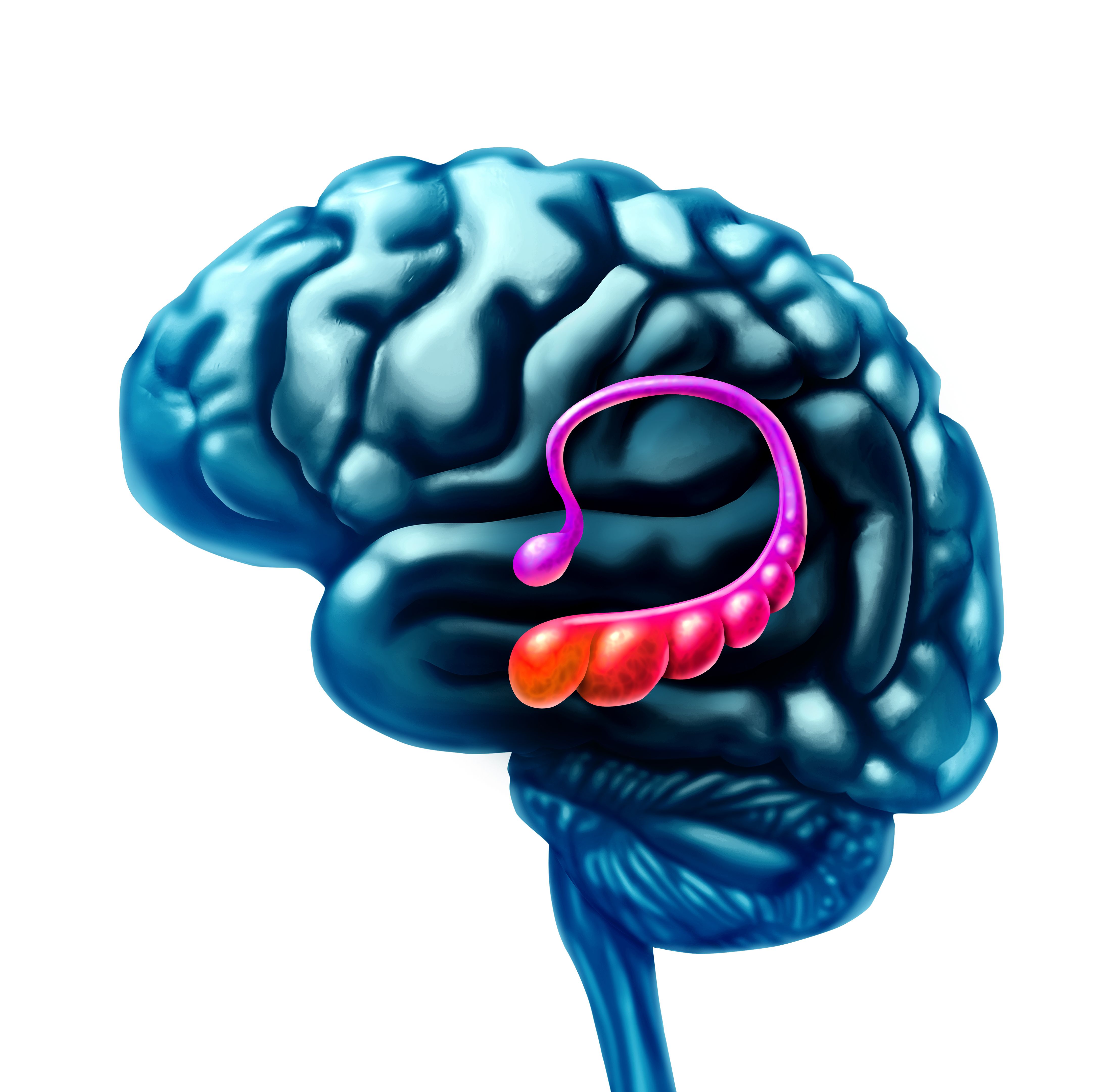
This chemical storm heavily involves your limbic system—the emotional, primitive centre of your brain. A key player here is the amygdala, which acts as your brain's threat-detection alarm.
When you wake up and feel that familiar sense of panic ('Not again, I need to sleep!'), the amygdala senses this distress and treats it as a literal threat to your survival. The limbic system is incredibly powerful; if the amygdala is sounding the alarm, it will completely override your brain's natural sleep centres. The brain simply will not allow you to transition into the vulnerable state of sleep if it genuinely believes you are in danger.
The Error Detector (The Anterior Cingulate Cortex)
Here is where the real trap lies, and why 'trying' to sleep never works. Deep in your brain is a region called the anterior cingulate cortex (ACC). You can think of the ACC as your brain's 'error detector'. Its primary job is to scan your environment, look at what you are trying to achieve, and flag up any errors.
When you are lying in bed at 2:00 AM, your conscious goal is to be asleep. But the reality is that you are awake. The ACC immediately detects this massive discrepancy and flags it as a critical error. The harder you try to force yourself to sleep, the more the ACC views your wakefulness as a persistent, glaring problem. It starts flashing warning signals, which triggers more anxiety, releases more noradrenaline, and keeps the limbic system on high alert. You become stuck in an unwinnable conflict: your desire to sleep is actively keeping you awake.
If this happens a few nights in a row, your brain's pattern-matching system takes over. The brain loves to turn repeated behaviours into automatic habits. Very quickly, it links your bed, the time on the clock, and the feeling of being wide awake and anxious. Your bed stops being a cue for sleep and becomes a conditioned trigger for hyperarousal.
The Cure: The Novelty Effect, Changing Your Routine, and Rewiring Your Brain
So, how do we fix this? You cannot break this cycle through sheer willpower while lying in bed. You have to break the neurological circuit, and you do that by physically changing your routine.
The golden rule of behavioural sleep therapy is this: if you have been awake in bed for 15 to 20 minutes, you must get out of bed. Move to a different, dimly lit room and do something quiet and non-stimulating, like reading a physical book or doing gentle stretches. You only return to bed when you feel undeniably sleepy.
From a neuroscience perspective, this simple action is incredibly powerful for three reasons:
- It Silences the Error Detector (ACC): By getting out of bed and deciding to read a book, you actively change your goal. Your goal is no longer 'sleep'; your goal is 'reading'. Because you are successfully reading, the ACC stops detecting an error. The alarm bells stop ringing, your heart rate slows down, and your limbic system finally feels safe enough to stand down.
- It Triggers the Novelty Effect: Moving to a different physical environment in the middle of the night introduces a mild sense of novelty to the brain. Neuroscience shows that exposure to a novel environment causes a subtle release of dopamine in the brain's memory centres. This 'novelty effect' acts as a circuit breaker, snapping your brain out of its rigid, anxious habit loop and resetting your brainwaves, making it easier to naturally transition back to sleep.
- It Protects Your Bed's Reputation: By leaving the bedroom, you actively stop your brain from building a habit-based association between your mattress and the feeling of frustration. You protect the bed as a sanctuary for sleep.
How Hypnotherapy Completes the Process
While getting out of bed is the immediate behavioural 'first aid', hypnotherapy does the deep, structural work required to stop the awakenings from happening in the first place. Here is how we use it to break the cycle:
Calming the Limbic System and Preventing Emotional Hijack: As we discussed, you cannot simply use logic to talk your conscious brain out of a 2 AM panic.
Hypnotherapy bypasses this conscious resistance and speaks directly to the limbic system. Neurological studies using brain scans show that hypnosis actively reduces activity in the amygdala. By doing this, we calm the emotional threat-detector and prevent the 'amygdala hijack' before it even starts, actively shifting your autonomic nervous system back into a restorative, parasympathetic state.
Creating New Neural Pathways: Your insomnia is currently a well-worn neural pathway. Hypnotherapy utilises neuroplasticity—the brain's natural ability to rewire itself—to reroute these connections. Through vivid mental rehearsal during our sessions, your brain experiences a new, calm response to the night.
Because the brain struggles to distinguish between a vividly imagined event and a physical reality, these new neural pathways are strengthened without you even having to 'try'.
Hypnosis does not just offer a temporary coping strategy; we are facilitating actual, lasting structural changes in your neural circuitry so that deep, unbroken sleep becomes your automatic default.
Waking up at 2:00 AM is a biological vulnerability, but staying awake is a habit maintained by the limbic system and the ACC.
By understanding your brain's mechanics, you take the fear out of the awakening. The next time your eyes open in the dark, remember: you are not broken, you are just caught in a loop. Get up, change your environment, and let your brain reset.
If you would like any help, or perhaps know someone who is struggling with sleep, then we help hundreds of clients here at the clinic with insomnia, hypersomnia or a disregualted sleep pattern. Why not book an appointment now with one of our Hypnotherapists. 01422 861989 or email [email protected]
Halifax Hypnotherapy Clinic Ltd, 12 Wade house road, Shelf, Halifax HX3 7PB.